
Table of Contents
- Why Bicycle Accidents Cause Serious Traumatic Brain Injuries
- The Hidden Dangers of TBI Symptoms After a Bike-Car Collision
- How Insurance Companies Undervalue Brain Injury Claims
- Why You Need Specialized Legal Advocacy for TBI Cases
- How We Secure Maximum Compensation for Bicycle Brain Injuries
- Our Track Record Recovering Settlements for Serious TBI Victims
- Why Acting Quickly Protects Your Legal Rights
- Getting Your Free Consultation with Our TBI Specialists
- What to Expect During Your TBI Claim Process
- Frequently Asked Questions (FAQ)
Why Bicycle Accidents Cause Serious Traumatic Brain Injuries
When a car strikes a cyclist, the impact often leaves invisible injuries that emerge days or weeks later. Traumatic brain injury (TBI) from bicycle accidents can permanently alter your ability to work, think clearly, and enjoy daily life. At Cariati Law, we’ve recovered over $230 million for injured Ontarians, and we understand how catastrophic these injuries become when insurance companies dismiss your symptoms or offer settlements far below what you deserve.
If you’ve been hit by a vehicle while cycling, you need legal representation that grasps both the medical complexity of brain injuries and the tactics insurers use to minimize payouts. Let’s walk through why these cases demand experienced advocacy and how we protect your rights.
Cyclists have almost no protection when struck by a car. Unlike drivers protected by metal frames, airbags, and crumple zones, cyclists absorb the full force of impact through their bodies and heads. Even at modest speeds, a collision can cause the brain to shift violently inside the skull, tearing nerve fibers and rupturing blood vessels.
The physics of a bike-car collision creates particular danger:
- The cyclist’s head may strike the pavement, the vehicle, or both in rapid succession
- The brain continues moving after impact stops, creating diffuse axonal injury (shearing of nerve connections)
- Impact forces that seem survivable often cause internal bleeding or swelling that worsens over hours
- Pre-existing conditions like prior concussions increase vulnerability to lasting damage
A collision at just 40 km/h can produce forces equivalent to falling from a three-story building. Many cyclists wear helmets, which reduce skull fractures but don’t prevent the brain itself from shifting inside the skull. This distinction matters enormously when you pursue compensation because courts and insurers often underestimate injury severity based on helmet use alone.
Your immediate action: If you’ve experienced any head impact during a bicycle accident, seek medical imaging (CT or MRI) within 24-48 hours, even if you feel “fine.” Brain injuries evolve, and early documentation creates the medical foundation your claim will need.
The Hidden Dangers of TBI Symptoms After a Bike-Car Collision
Traumatic brain injury symptoms don’t always appear immediately. Some victims walk away from collisions feeling dazed but functional, then experience escalating problems over the following days or weeks. This delayed onset creates a critical vulnerability: if you don’t seek immediate medical attention, insurers later claim your injuries weren’t serious or were caused by something else.
Common post-collision TBI symptoms include:
- Persistent headaches, often unresponsive to standard pain medication
- Dizziness, balance problems, or vertigo that worsens with movement
- Difficulty concentrating, memory gaps, or mental fog
- Light sensitivity or blurred vision
- Irritability, mood changes, or depression disproportionate to your typical temperament
- Sleep disruption despite feeling exhausted
- Sensitivity to noise that makes normal environments unbearable
Many cyclists don’t connect these symptoms to the accident. You might attribute a persistent headache to stress or assume memory problems reflect normal aging. Meanwhile, the window closes for gathering medical evidence that directly links your symptoms to impact forces.
We’ve seen cases where victims waited weeks before seeking neurological assessment, only to face insurers arguing the injury was pre-existing or unrelated to the collision. A knowledgeable attorney documents symptom patterns from day one, ensuring medical records support the causal chain between impact and injury.
Your immediate action: Keep a detailed log of any physical, cognitive, or emotional changes after your accident, noting the date and time symptoms appear or worsen. Bring this journal to your first medical appointment.
How Insurance Companies Undervalue Brain Injury Claims
Insurance adjusters approach bicycle TBI claims with systematic skepticism. Unlike a visible fracture on an X-ray, brain injury relies on symptom reports, neuropsychological testing, and imaging results that require interpretation. Adjusters exploit this ambiguity to minimize liability.
Their common tactics include:
- Arguing that CT scans show “no acute findings,” implying injury severity is overstated (when many serious injuries don’t show on initial imaging)
- Offering quick settlements before delayed symptoms fully emerge, locking you into inadequate compensation
- Demanding multiple independent medical examinations, treating repeat testing as proof you’re exaggerating
- Attributing cognitive or mood changes to pre-existing depression or stress, not the collision
- Focusing on helmet use as evidence you were protected and therefore couldn’t have serious injury
The financial incentive is stark. A minor TBI claim might settle for $15,000 to $30,000. A properly documented serious TBI can justify $200,000 to $500,000 or more, depending on age, occupation, and lasting effects. Adjusters know the difference and use procedural delays and medical skepticism to push you toward accepting far less.
We negotiate from a foundation of thorough medical documentation and expert testimony. We commission independent neuropsychological assessments that quantify your cognitive deficits, lifestyle restrictions, and reduced earning capacity. When insurers undervalue your claim, we’re prepared to litigate rather than accept an inadequate offer.
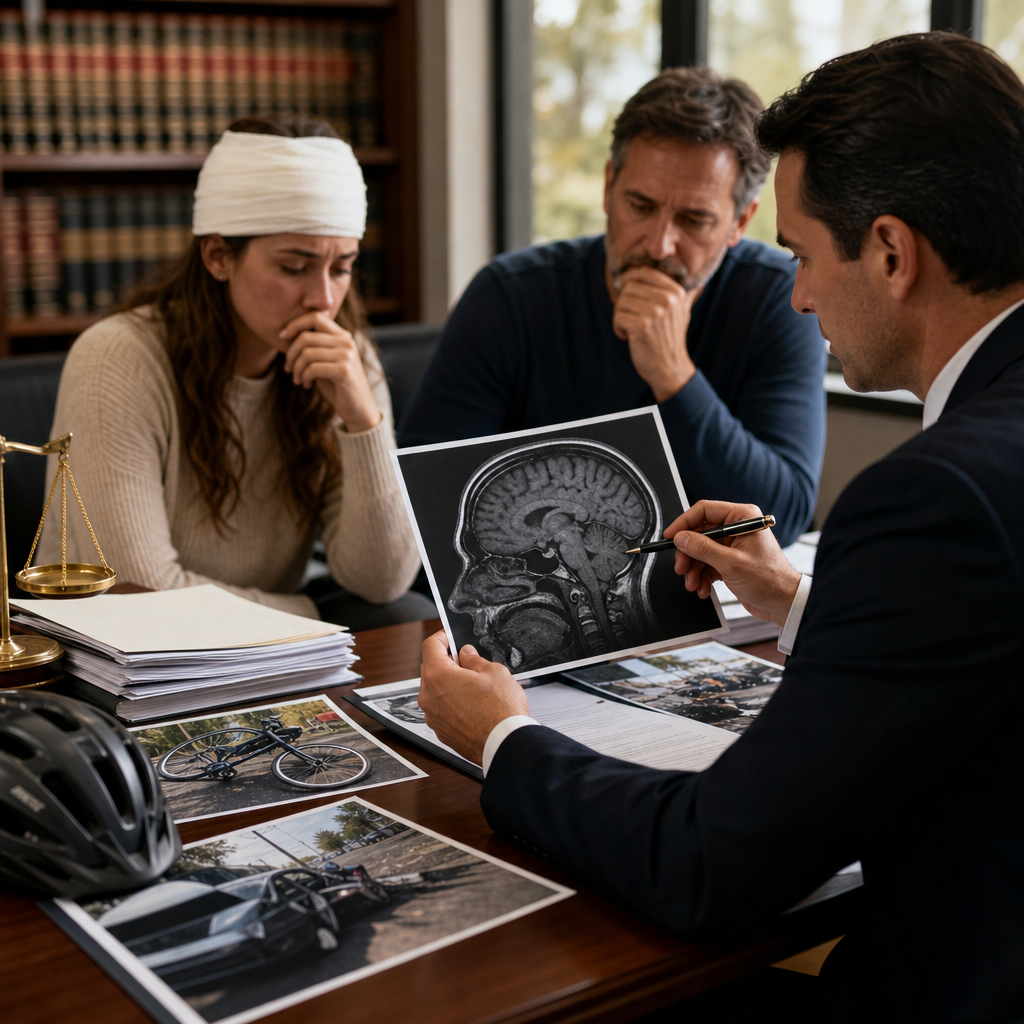
Your immediate action: Decline any settlement offer within the first 90 days of injury. This timeframe is too early to assess long-term effects, and accepting signals weakness in future negotiations.
Why You Need Specialized Legal Advocacy for TBI Cases
Brain injury law intersects neuroscience, medical causation, and damages calculation in ways that demand experienced advocacy. A general personal injury lawyer may not recognize the subtle neuropsychological changes that prove lasting impairment or understand how to present expert testimony effectively to judges.
We focus specifically on serious injury cases, which means:
- We work with leading neurologists and neuropsychologists across Ontario, ensuring your medical team is the best available
- We understand how to interpret advanced imaging (diffusion tensor imaging, functional MRI) and translate complex neuroscience into compelling testimony
- We know Ontario court precedents on brain injury damages, allowing us to calculate realistic compensation ranges based on your circumstances
- We recognize the difference between acute TBI recovery and permanent cognitive changes, adjusting claim strategy accordingly
When we take on a bicycle TBI case, we invest in expert consultations early, before settlement negotiations begin. This upfront investment prevents the common pitfall of underestimating long-term effects because you felt “mostly recovered” at three months post-injury.
Your immediate action: Interview any attorney you’re considering by asking specifically about their experience with TBI cases. Ask how many brain injury claims they’ve pursued to trial or substantial settlement. If they hesitate or cite a low number, keep looking.
How We Secure Maximum Compensation for Bicycle Brain Injuries
Our approach combines aggressive investigation with medical precision. From your first consultation, we assign a dedicated team to gather evidence, coordinate medical assessments, and build an undeniable case for maximum compensation.
Here’s how we work:
- We obtain the collision scene report and vehicle data (dashcam footage, traffic camera recordings, witness statements) within weeks, before evidence disappears
- We coordinate with your medical providers to ensure complete neuropsychological documentation of cognitive, emotional, and functional deficits
- We calculate lifetime costs associated with your injury: ongoing therapy, medication management, occupational support, and reduced earning potential
- We commission life care planning assessments that project your needs across decades, not just the immediate recovery period
- We prepare detailed demand packages supported by expert testimony, making clear the value our case will prove at trial if necessary
When insurers receive a comprehensive demand with strong medical backing and credible trial readiness, settlements increase substantially. Many adjusters know we litigate if offers fall short, and they adjust their positions accordingly.
We also offer brain injury claims support tailored to the unique challenges cyclists face returning to activity and work after TBI. This practical advocacy extends beyond the legal claim.
Your immediate action: Gather all collision-related documents: police reports, hospital records, imaging results, and any witness contact information. Organize these chronologically and bring them to your consultation.
Our Track Record Recovering Settlements for Serious TBI Victims
We’ve recovered over $230 million for injured Ontarians across personal injury and employment law. Many of these cases involved serious traumatic brain injury from vehicle collisions, falls, and workplace incidents.
Our success comes from combining aggressive advocacy with the medical precision that TBI cases require. We don’t rush settlements. We don’t accept offers based on preliminary imaging. We wait until the full scope of injury becomes clear, then we negotiate from overwhelming strength.
Clients trust us because we deliver results without charging upfront fees. Our contingency model means we’re invested in maximizing your settlement because our fee depends on your recovery. We also make home and hospital visits for clients unable to travel, and we maintain 24/7 on-call availability because serious injuries don’t respect business hours.
This commitment to accessibility and follow-through matters profoundly in TBI cases. Your symptoms may be unpredictable. Your medical appointments may cluster during difficult periods. We accommodate these realities while aggressively pursuing your claim.
Why Acting Quickly Protects Your Legal Rights
Ontario law imposes strict time limits on personal injury claims. You generally have two years from the injury date to initiate legal action, but this deadline is deceptive. The sooner you secure legal representation, the more evidence we can preserve and the stronger your case becomes.
Early action protects you because:
- Witness memories fade rapidly; we interview people within weeks while details are fresh
- Medical providers are more likely to document thorough assessments if a lawyer coordinates your care early
- Insurance adjusters are less entrenched in low valuations before internal files develop
- You avoid the risk of missing evidence that later becomes impossible to recover
- Statute of limitations can be complex; we ensure you don’t inadvertently waive your rights

We’ve seen cases derailed because clients waited six months or a year before consulting counsel, believing they should “recover first” before pursuing claims. By then, witnesses had moved, critical medical documentation was incomplete, and insurers had anchored their positions. Acting immediately doesn’t mean rushing into a settlement; it means securing your legal position while maximum evidence is available.
Getting Your Free Consultation with Our TBI Specialists
We offer free initial consultations to all injury victims, no obligation and no upfront fees. During your consultation, we’ll review your accident details, discuss your symptoms and medical treatment, and explain how we’d approach your claim.
You’ll speak with an attorney who focuses on serious injury cases and understands the unique demands of bicycle TBI litigation. We’ll also explain our contingency fee model, so you know exactly how we’re compensated and why your interests align perfectly with ours.
We’re accessible:
- Call us to schedule a time that works for you
- We come to your home or hospital if traveling is difficult
- We’re available 24/7 for urgent questions or new developments
- Initial consultations are completely free, with no pressure to retain us
This accessibility matters. TBI symptoms can make phone calls or office visits exhausting. We remove that barrier.
What to Expect During Your TBI Claim Process
Once you retain us, we move through a structured process designed to maximize evidence and build leverage before settlement discussions begin.
Immediate phase (weeks 1-4): We gather all collision and medical documentation, obtain police reports, identify witnesses, and request video footage from nearby businesses or traffic cameras. We coordinate with your medical providers to ensure comprehensive neuropsychological assessment.
Investigation phase (months 1-4): We obtain your full medical records from all providers, commission independent expert evaluations, and document how your injury affects daily functioning, work capacity, and relationships. We calculate projected lifetime costs associated with your injury.
Demand phase (months 4-8): We prepare a detailed settlement demand supported by expert testimony, medical documentation, and damages calculations. We submit this to the insurer and begin negotiations.
Resolution phase: Depending on the insurer’s response, we either negotiate toward settlement or prepare your case for trial. Most cases settle during this phase, but we’re fully prepared to litigate if necessary to secure fair compensation.
Throughout this process, we maintain regular communication with you, updating you on progress and explaining each development in plain language. You’re never left wondering where your case stands.
The timeline varies depending on injury complexity and insurer responsiveness, but serious TBI cases typically resolve within 12-18 months. This patience allows your long-term prognosis to become clear, ensuring compensation reflects reality rather than optimistic early assessments.
If you’ve been struck by a car while cycling, contact us today for your free consultation. We’ll assess your case, explain your options, and begin protecting your rights immediately. With over $230 million recovered for injured Ontarians, we have the experience and resources to secure the compensation you deserve.
Call Cariati Law at 905-629-8040 for a Free Consultation. Our trusted personal injury lawyers are here to answer your questions, and fight to seek justice for you.
Frequently Asked Questions (FAQ)
What makes traumatic brain injuries from bicycle accidents so difficult to prove in legal claims?
Brain injuries from bike-car collisions often lack visible external evidence, which insurers exploit to minimize claim values. We’ve found that TBI cases require specialized medical documentation, neuropsychological testing, and expert testimony to establish the full scope of cognitive, physical, and emotional damage. We work with leading medical professionals to build compelling evidence that demonstrates both immediate and long-term impacts on our clients’ quality of life and earning capacity.
How quickly do I need to take legal action after a bicycle accident involving a brain injury?
We recommend contacting us as soon as possible because critical evidence deteriorates over time and witness recollection fades. Ontario’s limitation periods create urgency, and early intervention allows us to preserve medical records, accident scene details, and expert assessments that strengthen your claim. We’re available 24/7 to discuss your situation and can begin protecting your rights immediately without any upfront costs.
What compensation can we actually recover in a bicycle TBI settlement?
We pursue damages that cover medical treatment, rehabilitation, lost income, pain and suffering, and future care expenses related to your brain injury. Our settlements have recovered over $230 million for serious injury victims, with TBI cases often representing our highest values due to lifelong impacts. We assess each case individually because brain injury outcomes vary significantly, and we fight to ensure you receive maximum compensation reflecting your specific circumstances.